Cara Kerja kopling

sistem kopling yang akan kita bicarakan disini adalah sistem kopling manual yang selanjutnya kita sebut dengan kopling saja.

Berikut ini ditampilkan gambar komponen penting pendukung kopling, secara urut : Fly wheel atau roda gila, Clutch disc atau plat kopling, Clutch cover atau dekrup dan Clutch release bearing atau Drek lahar.

Susunanya di dalam mobil adalah :

Cara Kerja :

Fly wheel atau roda gila meneruskan sekaligus menyimpan energi dari Crank Saft (kruk as) mesin saat mesin hidup (berputar), Plat kopling menjadi satu-satunya perantara tenaga mesin dengan Porseneling kita yang akhirnya tenaga ini akan diteruskan ke Roda. Sedangkan Dekrup bekerja sebagai pengatur kapan tenaga mesin di teruskan dan kapan tenaga mesin tidak diteruskan, hal ini dilakukan oleh kaki kita saat menginjak atau melepas pedal kopling melalui perantara Drek lahar.

Catatan : Dekrup di ikat dengan 6(biasanya) baut terhadap fly wheel. plat kopling menjadi pengisi bagian tengah antara fly wheel dengan dekrup. Pada bagian tengah plat kopling terdapat lubang bergigi yang akan masuk kedalam As blender sebagai penerus tenaga dari plat kopling ke Gearbox porseneleng.

Ketika kaki tidak menginjak pedal kopling

Ketika kaki kita tidak menginjak pedal kopling , dengan melihat susunan diatas maka bantalan dekrup akan menekan plat kopling terhadap fly wheel sehingga seolah olah Fly wheel, plat kopling dan dekrup menjadi satu kesatuan sebagai benda rigid. sehingga apabila fly wheel berputar 10rpm maka demikian pula dengan plat koplingnya. Dengan cara inilah tenaga dari mesin dapat di transfer ke dalam Gearbox porseneleng (melalui as blender) yang pada akhirnya diteruskan ke roda.

Ketika kaki menginjak pedal kopling :

Ketika kaki kita menginjak pedal kopling, maka dreklahar mendorong kuku/ tuas dari dekrup sehingga bantalan dekrup yang menekan plat kopling dan roda gila terangkat. ketika terangkat inilah posisi dikatakan Free / perei. Dimana perputaran dari roda gila tidak di ikuti oleh perputaran dari plat kopling. sehingga tenaga dari mesin tidak sampai pada gearbox perseneleng. Pada saat ini lah perpindahan gigi dari porseneleng dapat dilakukan.Didalam gearbox porseneleng inilah tenaga dari mesin di atur sedemikian hingga sesuai dengan kebutuhan pengemudi melalui rasio gigi.

Masalah Kopling

Susah masuk gigi : hal ini mungkin dapat disebabkan oleh beberapa hal, sebelum dapat mengetahui sumber kerusakan kita harus dapat mengetahui ciri2 atau gejala2 yang terjadi. Gejala2 yang mungkin terjadi antara lain adalah :

  • Susah masuk gigi Vosneling baik saat mesin dimatikan maupun di hidupkan : hal ini berarti terdapat kesalahan pada sistem mekanik pengoper gigi hal ini dapat berupa tongkat yang sudah oblak, sift cable atau kabel gigi yang sudah rusak atau putus atau mekanisme pengoper gigi didalam gearbox.
  • Kopling susah masuk gigi hanya pada saat mesin di hidupkan atau dinyalakan, namun mudah jika mesin dimatikan : dalam hal ini ada 2 kemungkinan kerusakan yang pertama adalah Kerusakan terjadi pada mekanisme pendorong clutch release bearing yaitu : master kopling atas bawah, atau kabel kopling yang masih menggunakan kabel, Fork/garpu kopling retak, bushing fork dan atau clutch release bearing atau drek lahar itu sendiri. Kemungkinan yang kedua adalah kerusakan terjadi pada Clutch cover atau dekrup, biasanya ada ciri2 tambahan jika kerusakan terjadi pada dekrup anda yaitu biasanya akan lebih susah masuk gigi lagi setelah melakukan perjalanan yang cukup jauh atau kondisi dekrup sudah panas, gigi akan semakin susah di pindahkan.
  • Kopling bergetar saat pertama mau jalan : 90% hal ini terjadi karena penggunaan Clutch disc atau plat kopling yang kurang bagus (pantekan atau imitasi murahan), 10% fly wheel bergelombang.
  • Suara mesin besar (rpm tinggi) tapi mobil ga mau lari (acceleration kurang) : 80% hal ini terjadi karena platkopling anda sudah tipis, dan lebih parah lagi akan timbul bau "sangit" ketika kita memaksa untuk accelerasi. 20% Fly wheel aus atau "legok" hal ini biasanya terjadi karena penggunaan plat kopling yang kurang bagus bahanya (imitasi).
  • Terdengar suara2 dari transmisi : ada beberapa jenis suara yang mungkin timbul dalam transmisi antaralain
    1. Bunyi Clutch release Bearing = bunyi dari drek lahar ini akan terdengar ketika kita menginjak kopling saat mesin hidup, dan akan hilang suaranya ketika kita melepas kopling.
    2. Bunyi Pilot bearing = Akan terdengar saat mesin dihidupkan meskipun kita menginjak kopling atau tidak.
    3. Bunyi pada saat jalan = jika kedua bunyi diatas dapat didengar tanpa pergerakan kendaraan, jenis bunyi yang ketiga ini hanya dapat didengar pada saat kendaraan melakukan pergerakan. Bunyi ini berasal dari bearing didalam gearbox anda.
    4. Bunyi mendesing pada gigi tertentu = hal ini terjadi karena terdapat kerusakan pada pasangan gigi yang bunyi tersebut kemungkinan gigi sudah aus atau rompal sehingga memberikan rongga udara yang dapat menimbulkan bunyi mendesing.

Jika anda mendapati masalah diluar dari gejala yang saya sebutkan mohon bertanya dan berbagi lewat email : disini, agar kami dapat mengembangkan wawasan kami lagi dan dapat menambah artikel ini sehingga berguna bagi yang lain.
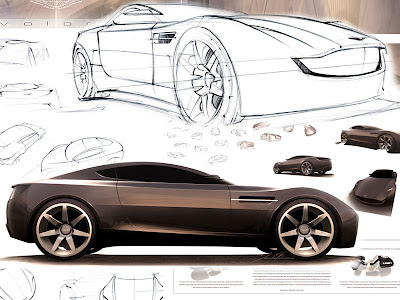
Volare The Aston Martin Sports Car Concept is an eco-friendly

Aston Martin Volare is an eco-friendly

The Aston Martin Volare is a proposal for a next-generation Aston Martin supercar which features an environmentally friendly drivetrain. Aston Martin, like all other supercar manufacturers, faces a dilemma over the next decade; How to dramatically reduce the carbon footprint of their vehicles while also maintaining performance levels which are equal, or superior, to past models.
 
Volare The Aston Martin Sports Car Concept

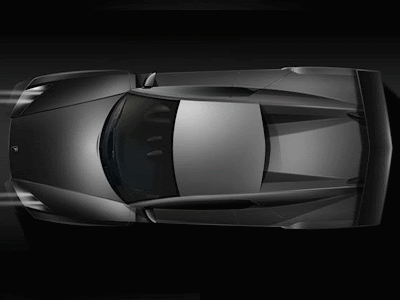
The Aston Martin Volare is a design study of a two-seater sportscar that combines the typical styling cues of the brand with a fuel-cell powertrain and an interior characterized by the use of eco-friendly materials. The author is Coventry graduate James Trim. The two-seater Aston Martin Volare Concept features a high-power fuel cell stack, located between the front seats, a rear mounted battery pack, and a co-axial electric motor at the front. To aid the Volare’s weight distribution, the two hydrogen storage tanks have been positioned directly above the car’s rear axle. The Aston Martin Volare concept was a vehicle developed by James Trim during his final year at Coventry University studying Automotive Design. He is currently looking for placement opportunities.
Volare The Aston Martin Sports Car Concept 

Speaking about the exterior design of the concept, James Trim explains, "The underlying aim when designing the Volare was to combine present day technologies with the profile of a car that would be instantaneously recognisable as that of an Aston Martin."
Trim said of the design; “Aesthetically the vehicle sharpens up the familiar Aston Martin proportions, with much crisper shoulders and a noticeable ‘floating’ rear deck. The solid front grille was inspired by the older V8 Vantage, while the flexible front fenders can alter their shape to reveal daytime running lights or full headlamps.”
Volare The Aston Martin Sports Car Concept 

The interior uses eco-friendly leather. The materials used in the tanning process are derived from sustainable, farm bred, Mimosa trees. The natural extract from the trees is used to produce the chemicals necessary for farming leather.
This results in an enironmentally-friendly natural process, producing breathable and highly flexible hides. The center console is made from recycled aluminium. The emerging binnacle and Bang & Olufsen twin lens speakers add a touch of theatre to the cabin. "The principle concern being confronted by Aston Martin is the harmful impact their cars are having on the environment. With this in mind, the Aston Martin Volare retains the fantastic sound and outright performance customary with that of a gasoline equivalent.
Volare The Aston Martin Sports Car Concept  

Side from the eco-friendly drivetrain, another dictating factor in the Volare’s design was the desire to create a car which was instantly recognizable as an Aston Martin. It was important that the styling was influenced more by the heritage of the brand, rather than the source of power. On the Volare concept all the hallmarks of Aston Martin are instantly apparent, sleek profile, short front and rear overhangs, trademark grille, powerful rear arches and uncluttered lines.

2010 Audi e-tron Sports Car Concept with "MMI touch"

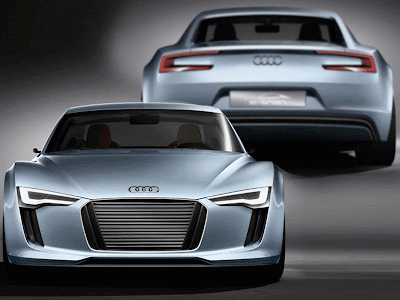
2010 Audi e-tron Sports Car Concept
 The Detroit Audi e-tron Concept is 3.93 meter (154.72 in) long and 1.78 meter (70.08 in) wide but just 1.22 meter (48.03 in) tall two-seater; just a few months after the debut of the Audi e-tron Concept at the 2009 Frankfurt Motor Show, this is now the second electric concept vehicle from the brand with the four rings. Audi is showing an uncompromising purist compact sports car with all-electric drive at the 2010 NAIAS. Lithium-ion batteries, located for an optimal center of gravity behind the passenger compartment and ahead of the rear axle, make an effective energy content of 45 kilowatt-hours available. This makes an operating range of up to 250 kilometers (155.34 miles) realistically possible. 

2010 Audi e-tron Sports Car Concept

Coupled with the Detroit Audi e-tron Concept's low gross weight of around only 1,350 kilograms (2976.24 lb), high-torque power units driving the rear wheels guarantee commensurate road performance. Two electric motors with a combined output of 150 kW (204 hp) and 2,650 Nm (1954.54 lb-ft) accelerate the coupe with ASF-design aluminum body from 0 to 100 km/h (62.14 mph) in just 5.9 seconds. The Audi e-tron Concept accomplishes the sprint from 60 to 120 km/h (37.28 - 74.56 mph) in a mere 5.1 seconds.
As previously with the first Audi e-tron Concept car shown in Frankfurt, Audi again bases all components in this electric vehicle on an integral concept with many revolutionary details: a heat pump as an efficient means of heating up and maintaining the interior temperature. The drive system, power electronics and battery have innovative thermal management - crucial for maintaining a high operating range coupled with outstanding interior comfort.
2010 Audi e-tron Sports Car Concept 

The two electric motors, which have their own cooling system, are mounted on the rear axle. This special package, featuring a 40:60 weight distribution, ensures perfect balance, which contributes to the driving dynamics of the Audi e-tron Concept.
The trapeze of the single-frame grille dominates the distinctly wedge-shaped front end and is flanked by two large air intakes. The top of the grille merges into the flat strips of the adaptive matrix beam headlight modules with their clear glass covers. All light units use ultra-efficient LED technology.
One design element that is specific to electric vehicles developed by Audi - such as the Audi e-tron - are the air intakes in the single-frame grille and behind the side windows on the C-post. They are closed flush under normal circumstances and opened by retracting slats when additional cooling air is required. The slats above the drive unit then also open to provide a better through-flow of air. These measures, too, maximize efficiency - the concept car is outstanding for an already low drag coefficient that is further improved when the flaps are closed.
2010 Audi e-tron Sports Car Concept 

The combination of aluminum and carbon fiber-reinforced composite material guarantees supreme rigidity coupled with low weight. Audi will soon use this technology in a similar form for future production vehicles. Despite the complex drive system layout with two electric motors and a high-capacity battery system, the total weight of the Audi e-tron Concept on display in Detroit is only around 1,350 kilograms (2,976.24 lb).
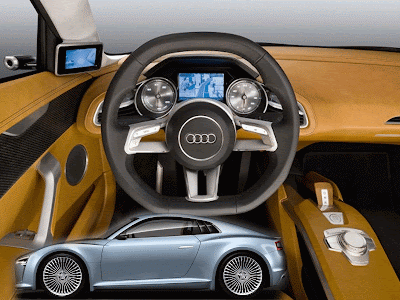
The MMI is controlled via a scroll pad with a touch-sensitive surface on the steering wheel ("MMI touch") - an element inspired by modern smartphones. The steering wheel itself is clearly flattened off at both the top and bottom, in a clear reference to motor sport.
A smartphone that can be integrated into the front section of the center console interfaces between the vehicle, the driver and external information sources. The driver can use a suitably equipped conventional smartphone as a car phone, address database, navigation system and video player. At the same time they can also use it as an operating unit for many specific on-board systems in the Audi e-tron Concept. Many phones that are suitable for these functions are already available from various manufacturers.
2010 Audi e-tron Sports Car Concept 

Characteristic for the concept of the Audi e-tron - and therefore also characteristic for a further development in an electric vehicle - is the near total elimination of switches and small components such as the ignition. The climate control unit is located to the right above the steering wheel. The display provides temperature and ventilation information. Again drawing inspiration from a smartphone, the system is controlled by means of a touch-sensitive sliding control.

Fenix Supercar ultra-powerful mid-engined V8 Announced By Lee Noble

Fenix Supercar ultra-powerful mid-engined V8
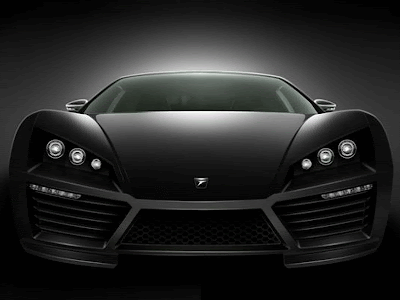
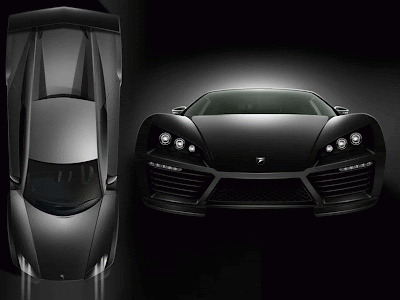
Lee Noble’s love for cars remains as young as it used to be. I can say so because even when he left the company he built, Noble, his newest creation, Fenix supercar. Leicestershire – Lee Noble, the maverick designer and engineer who has defined the British low volume sports car market in recent years, is back in the hot seat of an all-new company, Fenix Automotive Limited, and is due to launch one of the most dramatic supercars of the century next year. 
Fenix Supercar ultra-powerful mid-engined V8
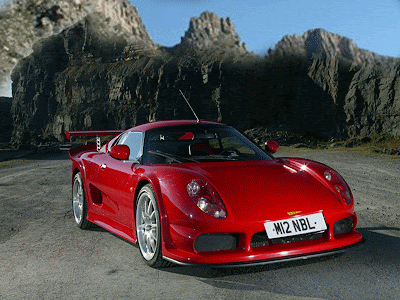
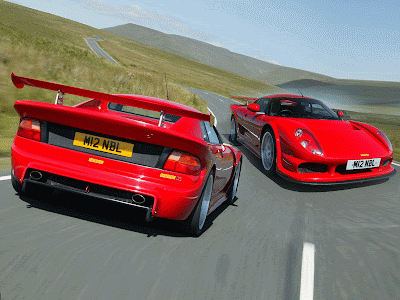
Fenix supercar is believed to be the sequel of the iconic M12 which was a great success but Fenix is a start from the scratch as far as the designing part is concerned. Fenix will be having two models for the grab whereby GM`s 480bhp LS3 V8 will be the `base` unit, while the 6.2-litre supercharged LS9 V8 will provide customers with a 638bhp power option. And powered with 638bhp engine, as Fenix claims, car will get from 0-100mph in less than seven seconds and go on to reach more than 200mph.
 Fenix Supercar ultra-powerful mid-engined V8
With successful production cars like the Noble M12 and M400 already under his belt (as well as the original Ultima and Ascari, among many others) Lee is investing his vast experience in delivering a lightweight, ultra-powerful mid-engined V8 supercar to market by the end of 2010.
“Our new car will offer buyers performance and dynamics that they’d normally have to spend well over £100,000 to experience, but at a far more affordable price,” said Lee Noble. “It will combine simplicity, strength and agility, while its two-seat, closed body will ensure sensible levels of refinement for road use.

 Fenix Supercar ultra-powerful mid-engined V8
With over 25 years’ experience in the low volume sports car market, Lee’s pragmatic approach to producing super-fast, giant-killing cars has won him credibility among buyers and the media alike. So while the first pictures of his new creation (due early next year) are sure to cause a stir, Lee’s grounded philosophy to manufacturing will ensure that the car is a production reality. In fact, development of the car began in earnest a year ago, and the first prototype, which will be used to validate the all-new chassis and powertrain, is currently being built in Port Elizabeth, South Africa, in the same plant that produced all the M12s.
Fenix Supercar ultra-powerful mid-engined V8
Fenix supercar’s first edition will be launched in UK in the second half of the year whereas its prototype is under construction in South Africa. Lee believes that he can roll out 100 editions a year and it will cost somewhere around £70,000 per unit.

Capstone Supercar CMT-380 the high performance hybrid electric microturbine vehicle Debut at LA Auto Show

Capstone Supercar CMT-380

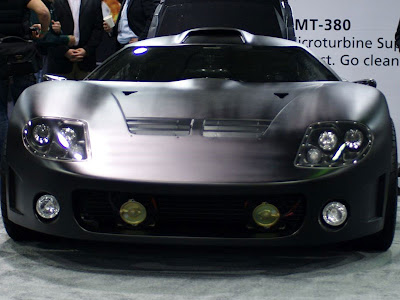
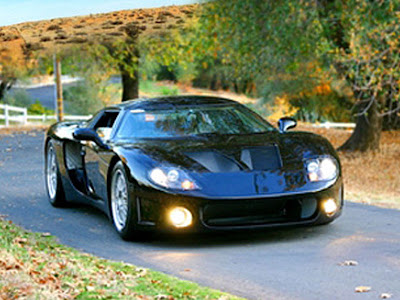
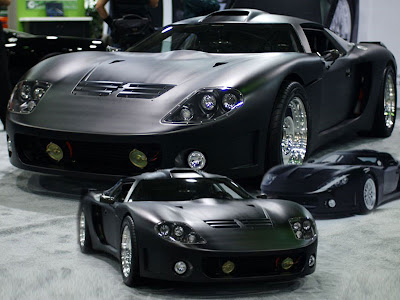
The Capstone CMT-380 was the surprise basement find of the LA Auto Show.The Capstone CMT-380 is essentially a prototype show car designed to highlight the technology and products available from Capstone Turbine Corporation. The concept for the high performance hybrid electric microturbine vehicle was developed by Electronic Arts (EA) Chief Creative Director Richard Hilleman.
Capstone Supercar CMT-380

After working on the car for four years, inventor Richard Hilleman was the man of the hour as he fielded questions about his unusual microturbine-lithium-ion hybrid powertrain fitted to a GTM Supercar kit body. It may still be in the test phase, but Capstone claims that the car can reach a top speed of 150mph, and is able to sprint from zero to 60mph in just 3.9 seconds.
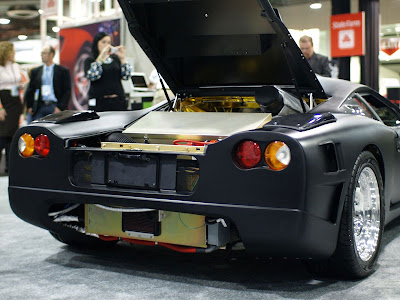
The CMT-380 features an unusual hybrid drivetrain which uses one of Capstone's new C30 (30-kilowatt) microturbine engines to extend the range of the primarily electric powered vehicle. The turbine can be run on either diesel or biodiesel.
Capstone Supercar CMT-380

The CMT-380 features lithium-polymer battery cells that can be charged at home or at a public recharging station. While driving, the CMT-380 can operate on 100 percent battery power in zero emissions mode for a range of up to 80 miles. When the batteries reach a predetermined state of discharge, the Capstone C30 microturbine quietly fires up and recharges the batteries on the fly to extend the driving range up to 500 miles. The diesel fueled C30 microturbine requires less maintenance than traditional combustion engines and produces ultra-low exhaust emissions. Hilleman has owned an electric vehicle – a converted Porsche 550 Spyder – for at 15 years and has constantly upgraded it. The EV used to have just 30 hp with lead acids but now uses lithium ferrous batteries and has 200 hp. The 100-mile range hasn't changed, though, and so he knew it was time to build a hybrid. He decided on Capstone's diesel microturbines as the range extender.
Capstone Supercar CMT-380

He knew he could rely on them – they've been used in buses for years – but there was still the challenge of fitting the unit into a car like this. Hilleman built the CMT-380 just for himself, but Capstone is happy to show it off as a proof of concept vehicle. It would be too pricey to put into mass production (Hilleman estimated he put in about $375,000 hours of work), but it's not impossible that a high-end, expensive, limited production run could be made some day.
Capstone Supercar CMT-380

Right now, Hilleman is really happy with his creation. He especially loves the sound of the vehicle. Three feet to the side of the car, the microturbine puts out about 87 dB, but in the cabin, it's nearly silent. California law might require him to add a muffler, but it's already quiet enough without one. He's got a solution for that problem, should he need it.
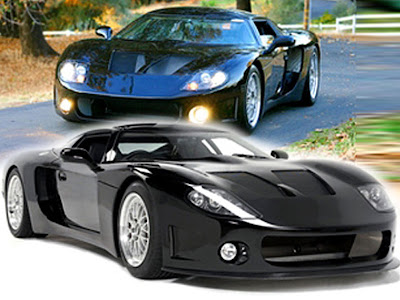
The chassis and bodywork of the Capstone CMT-380 are borrowed from the Factory Five GTM kit sports car, and modified to accept the hybrid drivetrain.
Capstone Supercar CMT-380

"Capstone's CMT-380 is just now finishing up the conceptual design and first article testing stage," said Darren Jamison, Capstone President and CEO. "We plan to finalize very soon a limited production plan, in part, based on interest received at the [2009] LA Auto Show. We anticipate customers will be a select group of individuals who appreciate its many innovative high-performance and high-technology driving characteristics, long driving range and ultra-low emissions," added Jamison.